

 John Tiefenbacher

580 California St., Suite 400
San Francisco, CA, 94104
…
10 pages


AI
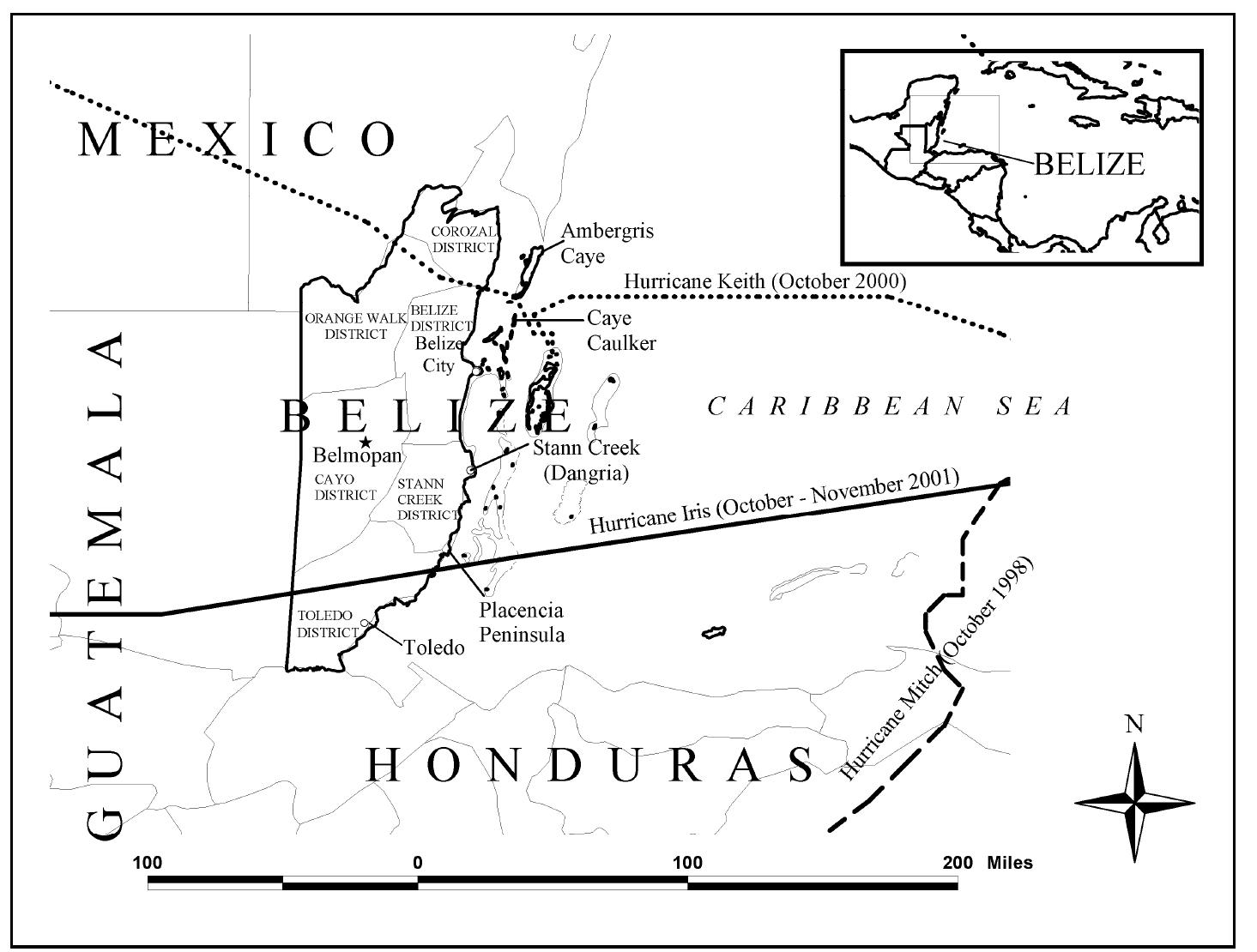
This study examines the effects of Hurricanes Mitch, Keith, and Iris on tourism in Belize. It highlights the unique challenges faced by the tourism industry during disasters, including the need for emergency management plans that accommodate both local populations and tourists. Analysis of visitor numbers and hotel occupancy rates before, during, and after the hurricanes reveals both immediate downturns in tourism and subsequent recovery trends, with varying impacts on different regions and years. The findings stress the importance of resilience in the tourism sector in response to natural disasters.
AI
Open Journal of Social Sciences, 2021
This study examines the impact of the COVID-19 pandemic on tourist arrivals in Belize using secondary quantitative data from 2011-2020. The researcher deployed the use of SPSS 25.0 statistical software and advanced technical skills to generate graphical analysis to reveal the damage caused by the COVID-19 pandemic. The research concludes that the Coronavirus pandemic has been the worst exogenous shock to the tourism industry. Now, policymakers are at a critical standpoint to access the economic damage and seek ways to rebuild the economy. Although there is a current vaccine to end the global pandemic, the recovery and immunization will take a while before the tourism industry can fully return to normalcy. This report highlights the drastic decline in tourist arrivals caused by the COVID-19 pandemic as well as suggesting ways how the tourism industry can rebound from its global crisis.
TOURISM AND THE THREAT FROM NATURAL DISASTERS IN THE CARIBBEAN REGION, 2021
Abstract The Caribbean region is subject to a variety of natural forces that can easily lead to social and economic disaster. Hurricanes are an annual event, but tend to affect the northern part of the region more than the southernmost islands, which are rarely affected. As hurricanes are a regular occurrence tourism has generally adjusted to dealing with their impact, but extreme events are often overwhelming in their impact. The region is also subject to earthquakes and volcanic activity, both of these directly related to a nation’s location on the Caribbean Plate. In this case the northern countries of The Bahamas and the Turks and Caicos Islands lie to the north of the plate and are unaffected. The strongest earthquakes are not felt in the small islands states but do impact the islands of the Greater Antilles. The Eastern Caribbean includes many volcanic islands and this region has to add volcanic eruptions to earthquakes as potential disruptive, or even cataclysmic, natural disasters.
Weather, Climate, and Society, 2018
This study estimates the impact of hurricanes on migration from 30 Central American and Caribbean countries to the United States from 1989 to 2005. In contrast to previous studies, hurricane destruction indices are employed to study the relationship of hurricanes and migration. These indices measure geographical destruction, which gives a more comprehensive and accurate view of the damage and impact that hurricanes have on the movement of people to international destinations. Controlling for the host country’s migrant stock and the home country’s income, country fixed-effects estimation shows that hurricanes have a positive impact on the ratio of the number of migrants to the home country’s population. On average, hurricanes increase migration by roughly 6%, but the impact is greater for more damaging storms. Estimating the geographical effects reveals that the size of this impact varies across countries. The most damaging storms are related to an increase up to 540% in the ratio of...
This paper analyses the impact of natural disasters in the Caribbean. The economic impact of natural disasters in the region has been significant, resulting in widespread destruction of the productive economy. This paper presents the main macroeconomic impact of disasters, e.g., a deteriorating fiscal balance, a collapse of growth and a worsening external balance, as a consequence of damage resulting from the event. By making special reference to the small-island developing state nature of many countries in the region, valuable lessons of the impact of such disasters on the capital stock can be learnt, particularly as the interruption of production of goods and services can be particularly devastating in an environment where few large sectors (agriculture, tourism) dominate the economic landscape.
After a hurricane strikes areas where tourists are located will have issues that will need to be addressed if tourism is to remain sustainable. The various factors are reviewed here, with specific reference to hurricane Dorian which struck the islands of Abaco and Grand Bahamas in early September 2019. Physical damage, especially to infrastructure, is examined. In the early stages after Dorian communications were a problem, followed by fresh water supplies and the electrical power. Flooding from a significant storm surge affected the towns of Marsh Harbour on Abaco and Freeport on Grand Bahama. The international airports in both these settlements were severely affected. Evacuation of tourists and the suitable location of tourist properties before and after a hurricane is discussed. Security issues and media perception in the aftermath are examined.
International Journal of Health System and Disaster Management
In 1998, Hurricane Mitch, the fourth strongest Atlantic Ocean hurricane in recorded history, destroyed much of Honduras. Hardest hit were more vulnerable populations of the rural hillside and the urban shanty towns. In the 20 years prior to Hurricane Mitch, a series of neoliberal policies shifted the tax burden to the poor and focused resources on export crops, forcing subsistence farmers to the less arable hillside and leading to deforestation. These moves left the already marginalized in a precarious position when Hurricane Mitch struck as topsoil was washed away and mudslides destroyed hillside farms. Additionally, gendered patterns of privilege were obvious. Men were encouraged to migrate to work leaving women to restore the farm, care for the children, and tend to the elderly. As disaster management is centered on preparation multiple lessons can be learned. First, in preparation multiway information systems need to include actors from the local level and embrace those marginalized by society. Second, women need to be seen as assets not victims and their well-being need to be taken into consideration outside of the family construct. And third, reconstruction effort need to be about building better not faster.
2015
As a small country of only 320,000 people, Belize is often forgotten in development agendas and when discussing development policies. Yet, problems with poverty and inequality are common in the small country, which is why it is important to understand the country in order to create development policy. This report focuses on the population pro1ile of Belize, as like many countries in the world, has changing population dynamics. In addition, the report brie%ly discusses some of the characteristics of population growth, average household size, gender inequality, ethnicity, education, immigration, and economic inequality. These characteristics are discussed through the context of the 2010 Census, although other monitoring publications were also used. While many of these factors only seem to point towards decline, this report is overall positive, as Belize is at a point where it can best capitalize on its attributes for future growth and development. However, the choices to capitalize on these attributes ultimately fall at the hands of the Belizean government.
Geojournal, 1992
In the last decade significant initiatives have been taken in the health sector with the view to better manage and respond to natural disaster emergencies. However, the recent hurricane disasters related to Hugo and Gilbert have highlighted many areas of health sector emergency planning still to be adressed. This paper briefly summarises the impact of recent natural disaster on the health sector in the Caribbean and comments on the performance of the sector during the emergencies. An effort is then made to detail what are the policy and programming issues to be tackled, if desired improvements are to be achieved.
Climatic Change, 2012
Climate change could have major implications for the global tourism industry if changing environmental conditions alter the attractiveness of holiday destinations. Countries with economies dependent on tourism and with tourism industries reliant on vulnerable natural resources are likely to be particularly at risk. We investigate the implications that climate-induced variations in Atlantic hurricane activity may have for the tourism-dependent Caribbean island of Anguilla. Three hundred tourists completed standardised questionnaires and participated in a choice experiment to determine the influence hurricane risk has on their risk perceptions and decisions regarding holiday preferences. The hurricane season had been considered by 40 % of respondents when making their holiday choice, and the beaches, climate and tranquility of the island were more important than coral reef-based recreational activities in determining holiday destination choice. Choice models demonstrated that
AI
The study finds Hurricane Mitch caused a drop of approximately 10% in tourist numbers for October 1998, but visitation sharply peaked by March 1999, indicating a quick recovery.
Hurricane Keith resulted in the lowest number of tourists in October 2000, with only 8,580 visitors recorded, compared to September's higher figures.
Hurricane Iris caused substantial damage to major infrastructure in southern Belize, with reports estimating recovery impact lasting significantly longer compared to previous storms.
Ambergris Caye remained the most significant tourist area with a consistent recovery, while Placencia experienced fluctuating hotel employment and occupancy rates post-Iris.
The research indicates that the September 11 attacks had a discernible negative impact on tourism rates, overshadowing the effects of hurricanes on visitor perceptions.

I am an environmental geographer who studies spatial change related to a variety of processes. I am principally interested in extreme natural events that sometimes beget disasters, but often prompt changes in spatial patterns of human and natural landscapes. Most recently, I have been focused on the understanding how viticulture is affected by changing climates and extreme events like wildfires that reflect changing weather and ecological conditions.
Migration, Tourism, and Belizeans Abroad (Draft) Most Belizeans abroad who left Belize before the country's independence did so with a memory of seeing few tourists in Belize, and many (if not most) would never have imagined that the country would become a destination for millions of tourists. Belizeans who live abroad now return to a country where tourism has been the mainstay of the economy for some time, and this is most evident when they fly to the Phillip Goldson International Airport (most arrive by air). With tourism infrastructure being the key element of tourism development, they also return to a country where aspects of this infrastructure like hotels is a significant factor in changing the country (especially in tourist destinations). Recognizing a link between migration and tourism, the focus of this paper is on Belizean emigration (mainly to the United States) and Belize becoming a tourist destination since the 1980s. This paper adds to the growing number of papers written on tourism in Belize and does so from an interesting angle of these two closely linked phenomena. It is a lot more than about Belizeans living abroad visiting their homeland, which is now a tourist destination. It's about how Belize becoming a tourist destination has influenced Belizeans abroad. It is also about a changed and changing Belize, Belize being changed by only tourism but demographically by immigration and how Belizeans visiting the homeland relate to those changes. Before Belize became a tourist destination In the late 1960s and into the 1970s, Belize was not a destination for tourists as it was in Caribbean countries like Jamaica, Bahamas, Barbados, Bermuda and Cayman (the last two being British colonies). There wasn't any promotion of tourism by the government, in a colony where the cost of air travel to get there was high. There is a famous quote from then Premiere of Belize George Price that in relation to tourism he didn't want Belize to become a nation of tray holders. And in a colony with an inadequate tourism infrastructure, he also noted that Belize didn't have the capacity to accommodate a large number of tourists. And so in the 1970s the government largely ignored tourism as an economic activity In Belize City where I grew up, there were not many places for tourists to stay, in terms of hotels and guest houses.
Tropical Cyclone Research and Review, 2024
Tropical cyclones (TC) pose a persistent natural hazard to Costa Rica. Exposure to natural hazards, such as mass movements and floods, is compounded by a growing urban population and inadequate land use planning. This study conducted a comprehensive analysis of the economic impacts of TC of Costa Rica from Hurricane Joan in 1988 to Hurricane Eta in 2020, assessing the impact by municipality and economic sector using baseline information of the Ministry of National Planning and Economic Policy. According to the study, road infrastructure (933.8 US million), agriculture (280.5 US million), river rehabilitation (153.96 US million), housing 98.26 (US million), and health (81.74 US million) were among the sectors most severely affected by TC over the past 30 years. The Pacific basin municipalities in Costa Rica were found to be the most vulnerable, primarily due to the indirect impacts of TC. The study's results offer useful information on the economic sectors and municipalities that are most exposed from TC in Costa Rica and provide a replicable methodology for other regions and countries facing similar tropical phenomena.
Tourism Economics, 2013
The authors quantify the impact of hurricane strikes on the tourism industry in the Caribbean. To this end they first derive a hurricane destruction index that allows them to calculate the actual wind speed experienced at any locality relative to the hurricane eye of a passing or land falling hurricane. They then employ this hurricane index in a cross-country panel data context to estimate its impact on country-level tourist numbers. The results suggest that an average hurricane strike causes tourism arrivals to be about 2% lower than they would have been had no strike occurred.
2016
DMSP-OLS Operational Lines scan System DRM Disaster Risk Management ECLAC Economic Commission for Latin America and the Caribbean ECCU Eastern Caribbean Currency Union EIRR Economic Internal Rate of Return EMBI Emerging Market Bond Index EM-DAT International Emergency Disasters Database EPI Environmental Performance Index EPPR Emergency Prevention, Preparedness and Response EU European Union FATF Financial Action Task Force FDI Foreign Direct Investment GDP Gross Domestic Product GFDRR Global Facility for Disaster Recovery and Reconstruction GIS Geographic Information System ABBREVIATIONS AND ACRONYMS 2 Belize-Right Choices Bright Future Systematic Country Diagnostic 3 GNI Gross National Income GNS Gross National Saving GTAP Global Trade Analysis Project GVC Global Value Chain HBS Household Budget Survey HHI Hirshman-Herfindhal Index UN-United Nations Commodity Trade COMTRADE Statistics Database UNDP United Nations Development Program UN-ECLACC United Nations Economic Commission for Latin America and the Caribbean UNFCCC United Nations Framework Convention on Climate Change UNODC United Nations Office on Drugs and Crime UNSD United Nations Statistics Division UNICEF United Nations Children's Fund UNWTO United Nations World Tourism Organization USA United States of America WDI World Development Indicators WEF World Economic Forum WHO World Health Organization WITS World Integrated Trade Solution WWF World Wildlife Fund
Even though existing literature has emphasized the importance of the host' attitudes, research in general has ignored the role of ethnic identities within communities. The purpose of this study was to identify the relevance and importance of ethnicity for tourism attitudes. The research site consists of two communities, Placencia and Seine Bight, in Belize, Central America. The effects of a number of determinants such as environmental awareness and intensity of contact on tourism attitudes are examined. Nearly 110 households were selected using a random sampling plan of which 107 households agreed to participate in this study. In general there appears to be broad-based support for tourism as an economic activity. Tourism as a form of development has increased the flow of non-tourist migration to the villages. The rise of tourism has brought residents of both Placencia and Seine Bight closer together. The policy implications of the study are also discussed. RESUMEN: Aunque la pre...
Natural Hazards Review, 2003
In late October 1998, the remnants of Hurricane Mitch stalled over Honduras and Nicaragua, killing more than 10,000 people and causing as much as $8.5 billion in damage. While Central America and the Caribbean have a history of natural disasters, the fatalities and destruction caused by Mitch were the greatest in at least several decades, prompting many questions including: What accounts for the extent of these losses? Is Mitch a harbinger of future disasters in the region? and What might be done in response? This paper seeks to shed light on these questions by examining the historical and geographic context of hurricane vulnerability in Latin America and the Caribbean. The paper examines trends in economic and other societal factors that increase vulnerability to hurricanes in Central America and the Caribbean and includes a case study of normalized hurricane losses in Cuba made possible by newly collected damage data published herein. The paper places its findings into the context of policies related to climate change and natural hazards.
2013
The Caribbean region is exposed to various natural hazards, including hurricanes, floods, landslides, earthquakes, and volcanoes that make the region's ecosystems and inhabitants vulnerable to loss, dislocation, injury, and death. This paper presents the result of a systematic literature review of peer-reviewed articles published from 1984 through 2012 regarding natural hazards and disasters (and associated concepts such as risk, vulnerability, adaptive capacity, and resilience) in the insular Caribbean. The review intends to address the following questions: Which hazards have been studied the most in the region? What have been the various foci of analysis? Which countries have been studied the most? With this review, gaps and limited information are identified. The results of the review are also discussed within the context of research needs and recommendations to increase knowledge that can be used to assist in advancing hazard and disaster management, adaptive capacity, and vulnerability reduction at different levels.
2010
B B Be e el l li i iz z ze e e M M Me e ed d di i iu u um m m T T Te e er r rm m m D D De e ev v ve e el l lo o op p pm m me e en n nt t t S S St t tr r ra a at t te e
